
?Core Curriculum and the SLP?

I am so confused, I almost don’t know where to begin. I never thought of myself as a therapist who followed or worked from the curriculum. I have always thought of myself as someone who supports development of the underlying skills needed to access the curriculum independently.
Working with 3-8 grades at a time it would be nearly impossible to know the exact curriculum in each grade. Not to mention seeing kids only 1-2 times a week it is hard to keep up, even with curriculum vocabulary. Often our small groups are designed to work on a specific skill and are made up of students of different ages or in different classes. Occasionally I’ve incorporated long term projects such as books or concepts especially if I knew my students were struggling. Going into the classroom 1-2 times a week the curriculum also flies by and unless there is ample consult time with the teacher, the speech language pathologist functions as a glorified aid, often with little opportunity for student contact.
I’ve read a little on Core Curriculum and frankly don’t understand how we are all of a sudden suppose to align our goals and objectives to the curriculum. I’m also shocked at how many speech language pathologists are falling into step with this. None of our formalized testing looks at anything to do with curriculum. We’ve been taught to report the standardized scores not grade levels or age levels (even if available). Our standardized test scores measure underlying learning and language skills not curriculum.
In the past 25 years my speech and language goals and objectives have focused on areas such as auditory awareness, word retrieval, pragmatic skill development, comprehension, articulation, oral motor development, development of higher order language, using complete grammatical sentences, memory, shall I go on. How do you align memory goals with the curriculum? Seriously, we all know that if a skill like memory is not addressed in a systemic developmentally appropriate way, significant splinter skills develop. With word retrieval you want the student to learn and employ various strategies to aid word retrieval, really how does that align with curriculum.
Now one thing speech language pathologists are good at is creative writing. Of course we could craft some lofty goals that makes everyone happy. But really what does that measure, how are we going to report on those goals and honestly how valid will that data be? Again I ask the question, how does our formalized and standardized testing align with the core curriculum? A better question is how will our students receive the direct and specialized therapy to address their specific needs if our goals are curriculum based?
I wish someone would explain it to me. I’m not thrilled with the concept of core curriculum to begin with so aligning my work to core curriculum will be difficult from a moral standpoint. However, if I have to do it in order to work then I will have to do it. I feel like powers that be are forcing our hand. Most school administrators and teachers don’t even know what we do and how important the skills we address are to independently accessing the curriculum. Perhaps that is our fault. Where is ASHA (American Speech Hearing Language Association) in all this? I believe that if we are not careful and don’t remain very specialized there will be no need for us in public schools. Not only will we, as a professional group, lose out but the students will too.
Someone explain to me how this will work? Lets have a discussion.
Related Posts
-
 Sir Ken Robinson calls for a revolution in education
Posted on Aug 2, 2012
Tags
Share This





I agree with you totally. I attended a course dealing with this put on by a member of our state office of education. When these objections were made, the presenter basically said that we were graduating too many with a 6th grade education and that if we now teach to grade level/core, the individual will at least have splinter skills.
My additional concern is that parents are being left out of the equation overall. The country was founded to have local school boards with parent input. This totally takes this opportunity away from our students parents. This is a huge, huge issue that is being brought to pass in a side-stepping manner. We all have much to be concerned about here.
Carin, Thanks for taking the time to comment. Thanks for agreeing. I am just shocked at so many educators, especially SLP’s and School Psych’s not speaking up. The comment you mentioned about splinter skills is not only concerning but extremely ignorant. Splinter skills don’t get you very far in life either. If you can’t connect the dots life is really hard. I’d love to know what the reaction in the room was when that comment was made.
I think special education parents are just so worried their kids won’t get a diploma that they just go along with just about anything the government, school administrations or teachers say. Parents are afraid to speak up and so are teachers. I personally sent my kids to private schools to silently boycott the State Mandated testing (which all my kids could have handled) What I really wanted to do was refuse to let them take the tests. Didn’t have the guts for that.
It would be helpful if ASHA spoke up for us. I think we could work with core curriculum if we have to but I don’t want it to define us as professionals.
Teresa,
I agree with you that we do not want to become general education teachers… that’s not our job.I also admire your passion for the work that you do. I am sure your students benefit greatly. However, IDEA says that our job is to provide access to the general education curriculum. The Common Core State Standards (CCSS) will be the foundation for that curriculum in most states. Many of the goals are goals that SLPS address… Participate in collaborative discussions with diverse partnes;demonstrate a command of conventions of English; demonstrate understanding of word relationships. Of course, I agree with you that we often need to go do a deeper, prerequisite level to assist students in achieving these kinds of goals, but the outcomes of our SL goals will help students to achieve these.
ASHA is in the process of developing some resources to help SLPs. We really have no “position” on the standards, though we did provide input as the standards were being developed. Our role is to advocate for how we will relate the CCSS to our work with students. I’d love to hear more about what kinds of information and resources would be helpful.
Our administrators want the SLPs to teach classroom vocab to our students. I think our role is to teach our older students how to learn and retain information, not just help them “keep up” or “catch up”. That’s more the role of a tutor.
I think we should and do incorporate common core vocab into our lessons and use those target words while teaching strategies/sklls.
Thoughts?
Hi Saundra
I think that is what all the supporters of common curriculum think we should be doing. What might look good on paper or in theory is usually not implemented well in schools. Most administrators and teachers have no idea what we do or know about our clinical training. I’ve always felt we should be aligned with the school psychologist and the underlying skills they address rather than academics. After all our testing does align with their testing not academic testing
Over the years my role going into the classroom has in most cases been reduced to tutor, reason being there is no time to plan with the teacher and going in once or twice a week you really can’t keep up. Teachers are also very reluctant to “Let go of the chalk”, as they should be since in the end they are the ones responsible. One therapist going into ever 25 different classes a week, there is not much else you can but help.
I will also help with vocab and concepts when relevant and I know there is a problem. However I still feel working on teaching students to figure out meaning on their own and how to retain it, is much better than kill and drill vocab which is soon lost.
Thanks for the comment
I think this is a good discussion, thanks for getting it started. I have studied the CCSS and find it to be a fabulous complement to what we do as SLPs in the school system. Once you learn more about the CCSS, expecially the Language Arts Core, you will find that you can map the form, content, and function elements of expressive and receptive langauge right on top of the grade level standards. I find we really need to understand how the tests we administer relate to syntax, morphonolgy, phonology, semantics, and pragmatics. I find the alignment very logical and magical. 🙂 I love the CCSS!
I love all the comments I’ve been receiving. This is a discussion I really want to have. I don’t do well with people or the government telling me how to service my students without valid explanation and proof. I have little confidence that the people making the decisions around CCSS are qualified to do so. Do they actually have classroom experience? Were they considered good or effective teachers? Are they just professional students with PhD’s? How many children have they worked with to understand child development? In our case do they even know special needs children, who qualifies, methods used for intervention? Do they know what speech therapists and special educators do? I know local administrators often don’t. So you see I have lots of questions. Questions that often receive no answers. If we didn’t question what kind of educators or for that matter people would we be?
Clearly I am not a fan of CCSS and state mandated testing. Basically there are several reasons for this. I want more for my child and all children. My impression of it is that CCSS brings everyone to the middle. With this type of teaching the bright kids are not allowed to shine. Our special needs students who have to take the test are stressed to the max, knowing that they have to do well or flunk high school. We give them accommodations upon accommodations which is great in school but guess what, life and the work place doesn’t give you many accommodations. Watching children have anxiety over testing tells me we’ve placed too much emphasize on it. Teachers have clearly transferred their stress over it to their students.
I’ve seen education in general change drastically since state mandated testing and no one can tell me it has improved. Other than state mandated test scores, I’ve seen no hard data. I doubt fewer kids are dropping out. I doubt more kids have having better success in college or the work world. I would actually guess that students are less prepared for college and perhaps in some cases, set up to fail. What are the colleges saying about this? Teachers now have to teach to the test and they are. I’ve watched 7th graders in every school I’ve been in learn how to write a formatted 5 paragraph essay and nothing else. That alone might not be too bad but considering they are not responsible for grammar or spelling it means very little. The powers that be do not seem to realize that employers are not going to care if you can write a 5 paragraph essay but they might care if you can’t right a grammatically correct sentence or know how to identify your spelling errors (and what to do about that).
How does CCSS align with our standardized testing?. Maybe once I can wrap my head around that I will have a clearer understanding of my role as a clinician. I was taught to base my goals on standardized testing that looks at the underlying skills of language not a made up curriculum. I’ve had a lot of success with the clinical model. I think of myself as a clinician first and align myself and my work with the school psychologist. So i will be difficult for me to switch my train of thought from a clinical model to an education model. If I can’t it may be time to look at other work settings. However, with CCSS it almost sounds like our goals are going to be written for us. There will be one for every strand and we can just “insert name here.” Guess what we tried that years ago and it didn’t work. I love the way things circle around.
I’ve worked in schools that had good curriculums and those that didn’t. Clearly the ones that had good consistent (consistent being key) curriculums produced stronger students. So I do believe curriculum is key. Perhaps CCSS can be the ultimate curriculum However, based on my observations over the past 10 or so years watching the state mandated testing evolve, I’m not confident that anything designed around state mandated testing can improve our education system. As I mentioned earlier, I personally would want more than CCSS for my own kids. I am also very much afraid that with CCSS special needs students or just average to low average learners will not get the help and “therapy” (yes we are therapists please don’t forget that) they need to be successful and independent in both the school and life settings.
I also believe the CCSS will eventually push us out of schools altogether. I will try to have an open mind about it though and play along. Hope I am wrong, I’ve been wrong before.
Does anyone have data on CCSS trials, how teachers will be trained and how CCSS will be funded? Speaking with colleagues it appears that many have received some minimal introduction to CCSS. Great not only will the students have splinter skills but so will the teachers:) Again hope I am wrong.
Hi All, I really appreciate your questions – they are helping me to understand concerns of the school-based SLPs in my state. Here are my thoughts:
Government Involvement. I totally undertstand your point about government involvement and I tend to agree. However, the IDEA is the federal law that generates funding for SLP services in schools. Therefore, we don’t have a choice but to follow the law if we are receiving a paycheck from the govenment. We are bound by the IDEA eligibility rules and bound to serve the purpose of speech-language pathology in the schools which is to help students make progress in their general curriculum. In turn, the general curriculum is to help students become college/career/life-ready…which aligns with the ASHA Code of Ethics.
Standardized Testing. Standardized tests should not drive the IEP. The student’s needs that relate to the curriculum should drive the IEP. The testing helps the professional to better understand the child’s needs.
Clinical Model. A good clinical model would support generalization skills to the child’s environments so it would make sense for the clinical model to help bridge the gap by developing treatment plans that will help the child be successful lin the school curriculum and environment.
CCSS Research. Directly in the CCSS document you will find the research that was used to support it. It also lists the committees and national experts that were used by the CCSSO (Council of Chief State School Officers). I especially like the examples of narratives in Appendix C. The research on the importance of narrative development is compelling! Many ASHA conference sessions have been devoted to narrative development.
Funding. States have the constitutional responsibility to fund their core. So if your state has adopted it, your state education budget will fund it. The feds pay for special education.
Child Development. I have found the CCSS is highly developmental in nature. For example, in the Language K-5, Comprehension and Collaboration Cluster, Standard 3, Kindergarten students are to “ask and answer questions in order to seek help, get information, or clarify something”. First graders in this same standard are to “ask and answer questions about what a speaker says”; by fifth grade they are to “summarize the point a speaker makes”. The developmental nature makes it easy to align a student’s IEP goals within a particular standard.
Articulation. Articulation therapy can easily be aligned to standards such as “speak audibly, express thoughts clarly”, “speak clearly at an understandable pace”, “produce initial/final/medial vowel sounds”. The core does not minimize the need for students to develop strong underpinnings….
Role of SLP. The overview of the standards sections includes SLP-friendly terminology i.e. “empahsize effective communication practices”, “highlight the importance of vocabulary acquisition through a mix or conversation, direct instruction, and reading”, “use of domain-specific vocabulary”, “phonological awareness”, etc. ASHA put out a really great webinar about how the CCSS aligns with the goals of speech-language pathology.
High Demand. In my opinion, because the CCSS is so language-based, it will create a bigger need for the school-based SLP because the language difficuluties of the students will suddenly become more obvious to teachers. Especially in secondary grades. History, Social Studies, Science, and Technical Subject teachers will suddenly become more aware of their students’ language skills (or lack of them” because they now have to teach subject-based literacy. Teachers simply don’t get the pre-service training on language the way SLPs do. It doesn’t even come close.
Good luck with your quest to wrap your mind around the CCSS. It is here to stay and so are SLPs. Cheers!
Hey Joselyn
We will have to agree to disagree at this point. I hope you’re right but right now I don’t have much faith. I have worked in schools with good curriculum teams and my kids went to schools with excellent and consistent curriculums. Those schools have already had to tweak their curriculums to accommodate mandated testing. I know it hasn’t made those schools better schools. It has actually taken away opportunities to excel. I realize ccss and mandated testing is here to stay (at least for now) but that doesn’t mean it’s the best.
Are speech therapists who service k-8 going to have to know all the strands in order to write an effective ed plan. That is just ridiculous. Our training is clinical, I align my self with the school psychologist more than the teachers with some students. And in over 25 years inevery IEP I have ever looked at, the speech therapy goals are reflective of needs found in our standardized testing. That’s the way we do it here.
CCSS is probably a better and necessary choice for some schools. I would have liked to see ccss tried out somewhere and data collected before being adopted nation wide. RTI was the pain a few years back. It makes sense in theory but then only thing that does is to delay evals and specialized services for some kids. All these years later I still can’t find data on the effectiveness of RTI. Considering education is becoming so data driven I find it funny that there is not data per se for either RTI or ccss.
I guess we’ll see what happens, reality is that most schools will not have the resources to retool immediately. We’ll probably be in limbo for awhile.
Hi Teresa, I don’t know why you would align yourself with school psychology when your purpose as a related service provider is to provide speech-language service to children as they make progress in their general education curriculum or their special education program. You and the school psychologist should be working in tandum with the teacher so the children can receive FAPE.
Hi Jocelyn,
And I don’t know why your wouldn’t. My last several jobs spanning over 15 years, I always worked closely with the school psychologists. Aspects of our testing are similar, our understanding of children’s language, organization and general disabilities is the same. We also know how to provide interventions and supports that classroom teacher don’t or can’t. That’s not to say that we don’t work with the teachers or try to explain the students needs/possible interventions to them. (I might also add that I rarely see a regular ed staff or administrator taking a note during team meetings) Perhaps in your part of the country school psychs don’t perform the same role as they do here in the east. We truly work as teams. My testing usually aligns with the educational testing and I touch base with special educators on a daily basis. However, I feel my role is to help develop the underlying skills, so the child can learn in the least restrictive environment. I don’t teach reading, I help children develop the auditory, phonological, comprehension and reasoning abilities if they haven’t developed naturally. I don’t know when that part of our job changed. Did someone just wake up one morning and say kids don’t need the underlying skills just keep moving them on and train them to pass a test. Anyway that’s what I feel it is like now. Jocelyn, everyone is entitled to an opinion. I’ve observed the changes in schools and the students in general appear less successful in class and clearly less cheerful. I wish I had data to prove that.
I’ve learned an awful lot about language and social/emotional issues from the school psychologists. Which has only enhanced my evaluation skills. I learn from everyone on my team, successful and inviting classroom teachers, commonsense administrators and most importantly from the kids themselves. I’ve learned little from books, workshops, data, politicians or consultants (well maybe a few).
Education circles around….it always does depending on the trend of the year. It’s good to keep conversations going.
Thank you for your response! I only have one year of experience working in the school setting. It makes sense to me to connect the two environments (i.e., the speech room and the classroom) to facilitate generalization of skills. My question is how do we go about doing this? I have tried to target vocabulary words from the classroom but by the time my students learn the words (in a structured setting), the class is already on a different unit. Do you have recommendations as far websites, articles, books that can provide us with some guidance?
Hi Carla
Unless schools commit to this and there is significant time for planning connecting curriculum is almost impossible. Really if you only have to half hour a week to see the student, how could you possible keep up with curriculum. It makes much more sense to me to target underlying skills to help the student access the curriculum independently.
I’ve been asked this question before and wrote a short piece on it https://theschoolspeechtherapist.com/curriculum-and-speech-therapy/
Carla, I have taken a list of vocab from our state tests and standards and narrowed it down to terms I think go with my language targets like terms for directions, sequencing terms, terms that go with multiple meanings… I am dividing these into sets to be targeted for four week intervals, which will allow for at least six vocab encounters for my students. Even my article and fluency students will focus on these as it is fairly easy to adapt their tx to my language lessons. Anyone else have ideas?
Great discussion! My concerns revolve around the amount of time it is going to take to figure out how the skills we work on fit into the CCSS. Earlier I mentioned articulation, which is just one example. The skills we help children develop are the underpinnings that allow them to access the curriculum and meet those goals. I have general ed high school students that are working on articulation and fluency. We will never see core standards that address those skills at that level. So, the question is…how am I going to justify/write goals that allow those kids to receive services? The same is true for middle school and upper elementary students. Language is addressed in the standards, but not artic, voice or fluency.
Tracy you and I are on the same page. Seems like we are reinventing the wheel. Our standardized testing is designed to identify the underlying language skills that are weak or missing. We work on these areas so the students can learn to access the curriculum independently. CCSS and it’s supporters want us to reinvent our field to fit their agenda. I think it will still be easy to address arctic and fluency via goals those skills are semi easy to measure and track. I am concerned about areas of language, auditory perceptual skills, general receptive and expressive skills and how we will measure those. We probably will be contributing to the development of splinter skills instead of filling gaps.
Thanks to everyone for commenting. It’s becoming a great discussion. I honestly think more therapists are afraid to speak up or question because they are afraid to lose jobs and benefits. Same with teachers. Lots of changes in education in general and not all good. Not everyone or every school needs to be fixed. Also changes are being made by people who do not know our skill set. I think that is what bothers me the most.
Keep the comments coming
I too have wondered where the heck ASHA is on this. For that matter, what are the universities teaching the ComD students about school tx? My class was certainly not prepared to be language arts teachers. Our SLPs are vocal among each other about this, but it seems ASHA is more in line with the curriculum line of thinking. My system SLPs have not had to be vocal with admin yet because, so far, they have not tried to change our tx.
Hi Saundra,
Here lies the problem, we are very vocal among ourselves but do not let administrators know. Most administrators I’ve worked with have so much on their plate that they let others take care of the special education. They have little knowledge or understanding about special education much less speech language pathology. There is a comment above from Deborah Dixon who is from ASHA. She is trying to put some information together on how to handle Core Curriculum.
Hi all,
Here’s a thought for consideration. Can we not kill several birds with one stone? For example, I have an activity that combines following directions, sentence imitation, and word recognition. The words used can be Dolch or other high frequency words or those from the students’ texts. I create a page of up to 16 words, placed randomly on the page, select test-taking or other directions that have been pre-programmed into the software, and click print for as many randomized worksheets as I want. My husband, a software programmer, created “Word Card” for me for RtI groups a number of years ago. I chunk the directions as I say them and have students repeat the chunks. This is done twice per directoin, and then students follow the direction. Students from my caseload practiced these skills in thereapy then I can push-in and share this with the teacher and entire class. After the teachers see what the activity does, they often have asked for copies of the activity or software so they can use it in class. This activity teaches word recognition. typical classroom directions, locatives, auditory comprehension & memory all while supporting the core curriculum. Likewise, there is a modified Bingo game that has a 4 x 4 grid on the same program. I enter the desired core vocabulary from science or social studies into the Bingo creating program and then use the definitions from the glossary as calling cards. I paraphrase the definitions as well as read them as is, since many of the ones in the book can initially be too complex for our students. When a student calls Bingo, he or she must give a definition for each word that has been covered, thus reinforcing receptive and expressive vocabulary acquisition. Another activity for sentence formation is done with words or phrases in a thematic container or bag. You can select Dolch or other high frrequency words, thematic words, and/or words/phrases from the currriculum. Sometimes I will print out the Dolch words on white and school or thematic words/phrases on colored paper. These words/phrases are placed in the container and students select one of each color and then must formulate a grammatically correct sentence using those selected. Sometimes I ask students to chain or connect their sentence to the one given by the previous student, thus encouraging listening skills and following a topic. Another sample of a multipurpose activity is Listen, Remember, Tell and Write. Usually I selected a topic that corresponnded with some unit the students would be doing in the future, such as a science unit on reptiles and lizards. I’d prepare a selection of basic iniformation containing the main idea in 1 statement and then several supporting details in the following sentences. I read the informaton several times and paraphrase, as needed, while the students listen. Next I ask the students to re-tell the ideas they remember and I write a bank of vocabulary or phrases on the board. Then the students are asked to formulate 1 sentence that captures the essence of what they heard and finally they write that sentence. Often the sentences are written on special stationery or on a surface that can be incorporated into an art project that requires direction following. An example of this is a 3-D lizzard that is glued onto a surface that represents a specific environment such as trees, dessert rocks, or even water for lizards that live in and near water. This is used to support a core science unit while teaching auditory comprehension & memory, notetaking, verbal & written sentence formulation, and understanding the main idea and supporting details. If anyone is interested, the Word Card software and our EASI books are on our website, http://www.marxpublications.com. These materials were developed for my use and have been refined over 30 years of practical application. Anyone wanting more information can contact me through the website or at anitamarcott@aol.com.
We don’t teach or tutor the students in the way teachers do. We teach the students skills that they are lacking and teach them metacognitive and metalinguistic skills that they need. I believe we can do this while giving some time and attention to the core curriculum. No one said we have to do this at every sesson every day… and after all, we are speech and language pathologist, and we have training & knowledge beyond what general education teachers have. We are the Super Heroes of education! (I think we are.)
Additionally, someone asked about where ASHA stands on this… the organization is very much in support of SLPs supporting the core curriculum.
Hi Anita
Thanks for the ideas and resources. Sounds like after 30 years you might actually have some clout in your school. Your teachers seem very receptive too. Honestly that does not happen in most schools. Most teachers are not interested in learning new techniques from close colleagues. I’ve also found it almost impossible to keep up with vocabulary seeing kids only once or twice a week. By the time I get to the kids they are on to other vocabulary words or units. The other thing I’ve also noticed (after 27 years in the field) is that I’m seeing a lot of splinter skills, especially in vocabulary. Older kids might be know words like photosynthesis but don’t know their smaller body part names. If they learn vocabulary and concepts but cannot attach it to previous knowledge those word and concepts rarely stick. My goal with students is to move them to higher order language development and thinking. Without making connections, understanding concepts such as ambiguous language they’re not moving too far after they’ve passed the test. Our work should not be dictated by the curriculum but the child’s individual disability or area of weakness determined through testing. Somewhere in the past that changed and that is what I am having trouble with. If I was working as a clinician (and we are clinicians) in a clinic I would not work on curriculum but help develop underlying skills and weaknesses so the child could hopefully improve and become more independent. Just a thought. I will highlight your site on my slp site page.
Teresa
When I brought up your outlined concerns last year with our special ed director, I got a stern warning and was only told that we had to start “thinking differently”. Seriously, the last year all I felt our department was doing was constantly defending what we do. They hired us because we are highly qualified, yet sometimes I feel like we are are constantly being told that we need to blend into the background and be a teacher assistant in the classroom. So happy that many of you are having positive experiences….it feels good to just vent a little. Our department just feels so overwhelmed.
The way I feel is that if we do need to “think differently” it should come from within our profession not from some bureaucracy that has no idea what we do, what we know and who we service. If it is so right and great for the School SLP to change the way we service kids, maybe private practitioners and pediatric outside providers should change their methods too. Obviously that would be wrong. In college we do two clinicals one in a hospital/rehab setting where we truly learn how to be clinicians and two in a school setting. I assumed based on my degree and understanding I was a clinician in both settings. Now they (not SLP researchers) are changing the rules and it isn’t right. Students will miss out on the intense services they need to prepare them for life. Will graduate training now include 2 clinicals and one student teaching under a school SLP? In order to think differently we will need more training. Like that’s going to happen. What we are being asked to do in schools is very far removed from what we were trained to do. Two question I would like to propose are, if we all go along with the new models will it be to the detriment of the students we service and is going along with the “new way of tinkling” unethical?
By the way thanks for reading and thanks for the comment
Wow, this conversation is so enlightening and is really getting me thinking about my own practices as an SLP.
Honestly, I see both sides of the coin. On one hand, if a student has a language goal such as comprehending what they hear or read, I do focus on underlying skills, just as being able to independently gather information, ask questions about what you read, organize and connect the information, inferencing, memory strategies etc. However, the students require practice in applying these skills to real information, correct? I believe that’s where the curriculum comes in. Now, most of our students can’t jump from practicing a raw skill to applying it at their grade level. We need to start at whatever level they’re at. But once we see they have made some measure of success, it will definitely benefit them to apply skills to the curriculum. Yes, our main goal is to provide them with the skills they need to do well independently, but while we’re going about this magical journey with them, these kids are sitting in their classrooms all day, getting more and more lost, and they need to feel successful there too. How will they continue to be motivated in our sessions if they keep spiraling in their classwork? We have to be fair to them and intermingle the two needs- develop skills and be more “on the ball” in class.
And are we expected to be Superman (or woman) and know exactly what’s going on in every single class at all times? I think not! I mean, seriously, I know I can’t handle that! But I do believe there are a few things we can do to access the curriculum and incorporate it within our sessions. It takes a little bit of thought, especially at the beginning of the year, when it comes to setting the tone with other teachers, who need to know that they must collaborate with us if this is to work.
For example, I have shared a google doc with my teachers, where they insert relevant vocabulary for each unit they’re going through. This document has separate pages for each grade, and columns are labeled as Content-vocab (ex. photosynthesis), instructional vocab (words they hear related to following a directive in class, such as “label, identify, etc.) and metacognitive verbs (infer, imply, evaluate, analyze). I share this document with the teachers at the beginning of the year and send out reminders every so often throughout the year to update the list. This way I do not have to go around collecting vocabulary words from each teacher, which is too daunting for me to even think about. Additionally, it gives teachers the ability to add information independently- you don’t have to keep hounding them, and it’s on a google doc, which makes it wonderfully accessible and constantly evolving! Sometimes a teacher will just give me a vocab book and write me a list of dates for each chapter/unit. Whatever works. My goal during sessions is not to help these kids master the vocabulary, but to incorporate the vocab into practicing and applying the skills being learned. So it’s really all about your focus and goal.
Another thing I do is during push-ins, I will ask the teacher to let me know what the students are doing within the next week or 2 (any projects or essays), and jot it down on the margins of my session note. By the next session, if what I’m working on can be implemented with a school project or essay, I’ll work with those things. If not, I will often use passages or vocabulary from state tests as the basis for sessions. And I never just give passages or vocab randomly- it’s always part of a larger goal or skill. So can’t we meld our 2 objectives together- our role as a clinician and “education facilitator” if you will?
What do you all think?
~ Rivky
Rivky
Thanks so much for taking the time to comment. I do think it is wonderful the steps you are taking to help ensure carryover. However, I still feel the time factor and large numbers will prohibit most of us from doing a lot of the work your doing. Lately I’ve been feeling like 2x a week for services just isn’t cutting it. I wonder who ever came up with that standard. When thinking about my own smart goals for my students the only goals I can come up with are those that require a lot more time in my day. I bearly have time to keep up with my notes, attendence, planing (haha) and lets not forget data collection, assessments, paperwork and meetings. I honestly don’t think we can be effective in the classroom, especially without the time to do it and a cooperative effort on the teachers part. That would require planning time and perhaps even training together. I am not sure we should be “education faciliator” we don’t need another role we have enough to do. The teachers (and assistants) should be taking our lead, consulting with us and using our techniques in the classroom setting.
Teresa
Hi, Teresa, thanks so much for your concern about Common Core. I write as a parent, not an educator. I received teaching certification in 1973; I only substituted briefly and then went on a different path. What you have written in this discussion makes sense to me. Your approach reminds me of “teach a man how to fish” rather than “give a man a fish today” if you understand the point I’m trying to convey. I have a perspective on our country’s education from simply observation, i.e., my parents, educated in NYC public schools in the 20s and 30s, who didn’t attend college but who had a better grasp of grammar and geography, etc. than I did as a HS grad; and my children who attended private schools AND college and who still have trouble with spelling and grammar, cannot write legibly (they can only print)and who seem to lack common, simple knowledge, eg, fractions used in recipes. And yet my state continues to spend more and more every year on education and per child rate continues to increase!! I am more than worried about CCSS for a number of reasons, and I agree with your concerns for your own specialty. Please continue to question the new standards and continue standing up for what you think.
Hi Patty
Thank you for taking the time to look at my blog and to comment. I continue to have huge concerns around common core both how it effects my profession and kids in general. Education is just not on the right track, everyone knows it but no one wants to be the first to speak up. I don’t see kids succeeding like they use to that’s the saddest part of all.
Teresa
Thank you for this discussion. I work in two settings ~ a school setting and an outpatient setting (clients through age 18). I am finding that over the past few years in the school system, the more I try to align myself with the expectations of pushing in to the classroom and relating to common core, the more I lose my identity as an SLP. I do see the value in trying to tie in the classroom vocabulary and units to what I do in therapy. I do not see the value of being just another warm body in a classroom and relying completely on the teaching style within that classroom (some responsive to having me there, others not so much). I believe the teachers are wondering why the heck we are there, and not seeing us as a resource. Now, on the other hand, in the outpatient setting, my services are either supplementary to the school setting or parents are paying out of pocket for their child to see me. I am running the show, I am feeling confident that I am targeting each child’s specific goals. I am feeling great as I see progress and results. There is a mutual respect in this relationship and the parents treat me as a specialist. I work for every penny I earn in this setting, but it is worth it.
Sadly, in the school setting, I am becoming the one the teachers run to when a student in their class is having difficulty, the one that qualifies the students with speech and language disorders, the one that tells parents about all of the goals I will target and the service time, and the one who is left feeling inadequate for not being able to target those goals the way I would want to in my perfect SLP world. Especially since once the child has speech on the IEP, the teacher either (a) doesn’t want me to pull them out of class to get their services or (b) doesn’t want me interfering in their classroom. I feel overworked, underpaid, and undervalued in this setting.
Not sure what the solution is here, but nice to vent…
Hi Heidi
Thanks so much for taking the time to comment on the discussion. I think you nailed it with your comment “the more I lose my identity as an SLP.” I too feel I do a better job of targeting a child’s needs in the therapy setting rather than in a classroom. In the therapy setting you can target and practice the underlying skills needed for success in the classroom. I really don’t know when the thoughts on that changed but hopefully that thinking will circle back around. It would be nice if we had ASHA’s support but we don’t. I recently made a comment to my principal about predicting that our numbers go up the further we get into core curriculum. Funny how core curriculum misses teaching a lot of the “core” skills. With teacher evaluations dependent on classroom data they will be running to us (special education in general) a lot quicker and for a lot of little things.
Teresa
Hi Teresa, I can’t agree with you more. I think I have tried to modify and fit in with the curriculum and have found myself running in circles trying to find the vocabulary of students in every different group and every different class. In the end I look down at the bingo board or the interactive activity I created and think “What did they learn?”—— “Oh, this week’s vocabulary.” Then I again feel like I am losing my identity as an SLP and although the student might have done better on the story of the week or the vocabulary quiz, have I really enriched their language? The truth is most of my students are quite delayed and are very low with basic vocabulary, often one or two years below their age. I need to help them develop their expressive language to share their basic thoughts and ideas and develop strategies to improve comprehension. The activities mentioned above (bingo board, etc.) could have been implemented by a parent, aide or during center rotation. I think, really, I get pulled in back and forth to do these things aligned with classroom curriculum and then I find myself going back to the question, “Have I given language therapy or a short tutor session?” The only answer that I can come up with is to use the CCSS goals as general goals (ex. collaborative discussions, main ideas and supporting details, ask and answer questions, produce simple, complex, compound sentences, etc) and then try to reach them through effective evidence based therapy. We can’t give in to the crowd. Yes, we have to change with the times but I also think sometimes we change too much and maybe that’s why noone understands what we do. We’re not reading teachers, we’re not aides, we’re not chameleons. Yes, we affect so many areas and that’s why we’re so important. Communication is the foundation of all learning. We are here to be on the cutting edge to provide therapy that opens the children’s eyes to their struggles and creates new strategies that the teacher’s haven’t implemented. We can implement them and then help them to carry them over and generalize them in the classroom independently. Don’t lose your identity and the foundation of our profession!
Reading these blogs are helpful in dealing with the NYS demands on Speech Pathologists and how they relate to us as therapists. Thank you for all the information. I would like to know if anyone is required to create Student Learning Objectives for their IEP students? I am fighting with my district in regards to the APPR and the SLO’s.
I know this is a late response but I have to provide my input…
As a therapist in the schools I actually like the common core. I don’t write my goals and objectives like they are written in the CCSS but they most certainly do align. For example, if a student is being seen for pragmatic language I will note in my PLOP that a X grade student is expected to (plug in skills listed for that grades ELA listening & speaking). My goals are still written as “student wil role-play such and such skill,will greet a peer or adult, make eye contact, etc. ” you’re ST goals are still addressing the common core and it actually supports WHY you are providing therapy. I agree that using the curriculum is difficult but I’ve tried (and usually succeeded) with using classroom materials in the middle school. Whether it be working on sequential words when writing a personal narrative or comparing/contrasting soil types.
Parti-our district in OH isn’t making us wrote SLOs. That’s dumb haha your IEP objectives ARE SLOs….maybe the admins in your district need to come in and see how much spare time you have to do more (unnecessary) paperwork 🙂
Hi Kristen,
I’m glad you’ve found a way that works for you. My feeling is that we are not responsible for teaching curriculum but giving the students what they might need to help them access the curriculum, learn how to figure things out and work independently. Unless a real coteaching model is in place, the SLP functions no more than as a glorified assistant. The amount and intensity of work I can do with a student in a small group setting is far greater than watching the teacher teach with few interactions for my student to participate. It does cover a lot of time though.
Goals are totally confusing and I am trying my hardest to write the bare minimum so I am not overwhelmed at progress report writing time. I still feek that my goals are to support the specific students learning needs not the prescribed curriculum. In reality our written goals probably are similar….we might just link them differently if we have to justify them, me to the students and you to the curriculum.
Thanks for taking the time to post a response. Sorry it took me so long to get back to you.
Teresa
Hi…I’ve been working as an SLP in the same public school system for the past 15 years. Our district is just now beginning to request that all therapeutic services be provided within the classroom setting. I came across this conversation and found it quite interesting, as I can relate to your feelings of confusion, disbelief, and frustration. My question to you, now, is: “How have you faired since you began this conversation? What have you learned? Has your opinion changed?” Miriam
Honestly, I have somewhat refused to do it and no one has had the time to really focus on it. I am lucky enough to work for directors that realize kids need more intensive services than in class can provide. I do go in class for some of the students but it is really not intensive since there is no additional time to plan with the teacher for the half hour I need to be there. Full schedule without lots of time. With that said I choose to work at schools that are not pushing curriculum goals.
Hello everyone,
It has been refreshing to read so many entries from SLPs who are dealing with similar issues as I am. One of my building Principals told me the second day of the school year this year that all SLP revives would be within the classroom and I was expected to align my therapy with the curriculum presented. Considering I participate in nine classrooms three days a week K-5 , it is a daunting task. I have students in three other schools the other two days of the week. It is very difficult to coordinate with the curriculum, and Prep materials that will be both therapeutic and curriculum based with such a diverse caseload and grade level span. The Principal also created my schedule, planning most of my inclusion service during English language arts but of course there are a few Math classes as well. It has been a HUGE challenge to just provide services, Designing new IEP goals to align with the expectations of CCS and incorporate”therapy” is a whole different challenge.
I am thankful for everyone who brings their ideas to meet these challenges , to this forum. The more we share our experise, the easier it will be for each of us to learn and understand our new roles in education settings.
My hope is that someone will finally say (especially to your principal) that this does not focus on the individual needs of the student. What type of system are you in? My guess is urban because you would never get away with a change like that in a suburban area. This is block scheduling for SLP. How dare your principal tell you how to service your caseload.
Thank you for bringing this issue to the internet. I get so frustrated with what is happening to slps in the schools, and I feel like nobody in charge (ASHA/district program coordinators) is helping us figure out HOW to do what they want us to do. To make matters worse, there is typically only one SLP per campus – we don’t have many opportunities to observe how to do what research and districts say we should be doing. In order for us to collaborate more with teachers and align our work with curriculum, changes MUST occur from the top.I am only in my second year as a school SLP, so I cannot imagine how frustrating these changes must be for someone who has truly honed their skills after 25 years.
One person cannot manage the fluency, articulation, language, and pragmatic skills of over 50 students who range from developmental levels of 2 years to 11 years old. It’s not possible to push into different classrooms, and make a difference in education if districts do not spend more on resources to make this happen. We don’t send kids with dyslexia, ID, SLDs, down syndrome, autism etc. to our lssps for intervention twice a week and expect them to show drastic improvements. Why are we expecting this from our SLPs?
At district meetings we are told to do more and more and more. I am yet to have a meeting where leaders try to come up with ways to make our jobs more efficient and meaningful – it’s always that we are doing something wrong. You aren’t exiting enough kids from speech, you need to make sure you are collaborating with teachers, you need to improve RTI. If the /r/ sound isn’t impacting education, then maybe you should dismiss him. WTF?! I’m sorry, but I’m not going to let someone enter the world who has to introduce themselves as Dewick (Derrick) in a job interview. Then, they hand us more and more paperwork. I’m yet to have a program coordinator take the time to observe my therapy sessions – if my paperwork is on time and correct, I’m a good sLP.
School districts need to accept responsibility for our changing profession – we cannot do it alone. At my district speech meetings, slps complain about teachers not implementing interventions. Teachers are going through the same things that we are going through!! They are drowning in paperwork, testing expectations, etc. They don’t have time to become speech and language experts, just as we don’t have time to become experts on their curriculum and teaching methods. If we both had more time and less bullshit paperwork, we could collaborate. Wouldn’t it be a dream if I could be an SLP for 5 classrooms?! I could actually collaborate with teachers and we both could work together on helping kids progress on curriculum goals and speech and language goals. We could learn from one another, and help kids progress on social, speech/language, and academic goals. Even if an SLP could work closely with a teacher for a couple weeks, they could better understand the teacher’s workload and curriculum. Then we could incorporate speech/language goals into the classroom in ways that actually make sense for the teacher. Right now, at least for me, this is a pipe dream. There is no time to do this. Has anyone else ever pushed into a classroom just to find that you are awkwardly watching while teachers have carpet time and call on your speech kid twice? Yeah, that was clearly not helping the kid.
Our frustrations are not the principal’s faults either. “MY PRINCIPAL DOESN’T UNDERSTAND WHAT I DO!!! WAHHH” The complaint I constantly hear. Your principal doesn’t have time to understand everything you do. They get the same bullshit shoved down their throats. Do you understand what your principal does? If your school is anything like mine, it’s not shits and giggles being an administrator. They have to micromanage staff to ensure test scores will be high, keep teachers happy, keep attendance high, make sure home abuse is reported to CPS, keep parents happy and involved, attend IEP meetings, control behavior, etc. I’m sure there’s more, but GUESS WHAT?! I don’t totally understand what my principal does. I highly doubt he’s complaining about me at his district meetings.
Who is the common enemy here? THE DISTRICT AND HORRIBLE HIGH STAKES TESTING LAWS AND LOW FUNDING. If the district wants us to work with 50+ kids and make meaningful and lasting speech/language/functional/academic changes in their lives, then by all means, come and show us how it’s done!!
This is not going to get better until those of us getting hurt by the current system (students, parents, teachers, administrators, SLPs, LSSPs, OTs, PTs, etc) make a stand together. We are told to make data driven decisions. Guess what? The data shows that the current system doesn’t work. Our jobs are only going to get harder as poverty increases (and it IS increasing) – an increase in Title One schools means an increase in students with disabilities and special needs.
We can’t give up hope!! Schools should be the ideal place for pediatric speech and language services to occur. I can’t feel good about myself if I’m not doing what is best. I know every day, I am letting a child down (because they deserve more than what I am capable of giving).
Hi Sarah,
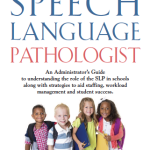
I’m actually very impressed that you as a second year therapist “get it”. Many SLPs feel the same way but like teachers, I believe they are afraid for their jobs. I had an RTI consultant once tell a group that teachers “don’t want to give up the chalk”. In my notes I wrote “I don’t want the chalk”. It was after the RTI consulting experience that I began blogging. I was one of the few experienced enough to see through her ideas.(I’m still not thrilled with RTI in general) I’ve worked in many school districts all with good and bad aspects. However, one thing they all have in common is that my colleagues and administration never understand the training an SLP has and what skills/experience we bring to the table. A second thing all schools have in common is that my workload is often beyond realistic expectations. I started researching the caseload/workload situation for SLPs and all I found was articles on how the SLP could “manage” their caseload. I did not need more advice on how to manage my caseload. After 30 years that was the one thing I was pretty good at. I realized the changes had to come from the top down. I also knew there was a big misunderstanding about our role in the schools. I recently wrote a book for administrators to help foster those changes. Who knows if it will make a difference but I hope so. Please take a look at it on bookloocker http://booklocker.com/books/8038.html or on Amazon. It took me 30 years to find my voice and I found it very therapeutic. I’m glad you’re starting early. I’m still looking for SLPs to review my book and I would be happy to send you a copy if you’re interested in that. E-mail me with you shipping information if you are interested. Good Luck Teresa