Parent Information
This page is designed for parents who have questions about the child’s speech and language development. Please visit my other pages too, especially Your Middle Schooler even if your child is years away from the tween years. Please contact me if you have any specific questions or need information in any specific area of speech and language development.
Teresa
Thinking about COVID 19, Schools and Speech Language Pathologists

To all you Speech Language Pathologists working with unreasonable caseloads now is the time to advocate for yourselves and your students. Think a lot about this as the guidelines for the “new normal” start coming out in every state.
This week in Massachusetts the guidelines for what school is going to look like were released. It pretty much encompasses what I expected it would. Earlier guidelines came out for summer opening only a couple of weeks ago. Both these documents provide very generic guidelines and both read as if the people who wrote them have never spent a day working in a public schools or even remember going to school. Again it is one more document that clearly shows that they do not know the role of the SLP in schools and how we work with kids.
According to what I read, here are some take-aways from the guidelines:
- Physical distancing-Students should be kept 3-6 feet away from each other and all face the same way. I don’t know about you but I have never been put in a space where social distancing was possible with a small group of 3-4 students.
- Limiting travel within a school-We have to pick up and return kids, we travel around the building constantly. I wonder if we are even going to be able to see kids in small groups.
- Based on what I read it appears that we would have to use a mask and a shield because face it we work closely with kids and spit flies
- We need to prepare for remote learning just in case. Well I did get a little experience with that during this last shut down. The three factors that seemed to be the biggest problems were my lack of training, not enough time to see everyone (since on line sessions have to have time cushions on each side and small groups are really not feasible) and lack of materials. I was able to convert many of my materials to on line but that took a lot of time. Will teachers and therapists be given the time to basically develop a whole new curriculum or find/buy/create new on line material? Will schools pony up for the cost? (As a side note, which has bothered me since shut down. Where, are the common core people on this? If common core is so great and so important why don’t we have an on line version with materials ready to go. Schools have incurred considerable costs trying to piece something together to get through the year. Why doesn’t the department of education have an on line platform ready to go? Not that I want this since I am not a fan of common core but really why does every school district in the country have to reinvent the wheel during a crisis?)
I think that those 4 points alone will make it impossible to service extremely large caseloads. Now is the time to approach your administrators and talk about your concerns not in the fall because they will be totally overwhelmed.
Beyond the 4 points mentioned above I have some personal concerns you might also want to point out
- How am I going to clean my materials and my room? Does the room need to be sanitized after each student or group? Where is the time to do this if your schedule is back to back? Will someone be hired to help with this? Will you be given adequate cleaning supplies that actually kill germs and absorb? Where is the nearest water supply to wash hands and help with cleaning? Say you regularly see 8-10 groups a day and you work in the office in between when is this cleaning suppose to take place?
- How effective can Speech Language Pathologists be with everyone in masks? I think that is a valid question. How do you work on articulation and pragmatics when you are wearing masks? Is it possible to just wear shields during therapy?
- Masks add a layer of distraction and your perception can be a little off both to the sides and down. This will affect all learning and coordination for some.
- Scheduling will be next to impossible, yet we will be on the hook if the IEP isn’t followed. Specifically ask you administrator what is expected and ask them to make a schedule for you. This is something I recommend all the time and it is the only way school admin will ever know the obstacles we face. Be very candid about the time you will need for assessments, IEPs. progress notes and added cleaning. Assessments will be up this year because many were skipped during the shut down.
- If kids don’t come to school every day, what will services look like? Can IEPs be followed if the student is not in school everyday? Will IEPs need to be rewritten?
- On line therapy seems to be the best thing since sliced bread. It is a good alternative but it has its limitations. There is no way I was as effective especially without experience, training and resources. On line therapy has been around for years, it’s a specialty area. It really hasn’t taken off like you would have expect to and there is a reason for that. So much of what we do needs to be hands on. One point that was sorely overlooked during the covid shutdown is that when you do on line therapy there needs to be another adult either with the student to facilitate/monitor or another team member in the session with you. Every in-service I have listened to has pointed this out as a safety measure.
No, I would not want to be the one who have to put any state guidelines together and I do understand why it has to be done. The guidelines from Massachusetts looks impressive, citing almost 4 pages of research but I always question the validity of the research. Is the research they used to come up with the guidelines reliable? I hope so but that doesn’t always happen with research especially now when there is so much question with the covid data and numbers overall. Could the guidelines be picked apart? Easily. Do the guidelines often contradict each other? At times. I think it will be interesting to see how guidelines vary from state to state.
Speech Language Pathologists will not be able to function in the same way given the “new normal”. We as a profession should be deciding how we do our job along with what makes a reasonable caseload (within the guidelines being presented) and not let school administration tell us what our jobs will be. I believe the guidelines are somewhat generic so schools have some leeway on how things are implemented. Just note if you were handling a caseload say even above 30 before covid, you will have a challenging time meeting the needs and the IEPs of these same 30 kids. You may be doing both in school and on line therapy. Department of Education will get around to looking at what was provided and what wasn’t. When that day comes it will not be pretty. Just make sure you keep in touch with your administration on what you are able to provide within the limitations of a school day (whatever that looks like at your school) and documented it. Say NO if you can’t take on more or can’t manage with the new restrictions. When possible provide administration with solutions that might work. Work as a team with other speech language pathologists in the district. I rarely see this happen but when it does it is a very good thing.
We will get through this, no choice we have to. However, how you get through this is up to you. I feel being proactive will make the situation a little bit better in the long run and your position in schools stronger. Working with other SLPs in your district will frankly give you more autonomy and a bigger voice. It is up to you to advocate for yourself and the students you service.
The Essential 55-book review

I was dusting some of my bookshelves and found this book The Essential 55 by Ron Clark. I remember being very impressed with this book back in 2009 and even wrote a book review. Remember something is a few years old doesn’t mean it isn’t very good or passe. Common sense and good manners go a long way. This book went beyond focusing on successful students (which seems to be the only focus these days)…it focused on creating successful people.
From 2009 Your Middle Schooler: A Unique Age
I’m always on the look out for common sense ideas that enhance more than just academics. In my field of Speech Language Pathology, pragmatic skill development is as important to us as receptive and expressive language development. Pragmatic skills are the social speech skills that help us become effective communicators, critical thinkers and problem solvers. People who are not strong students academically can do well in life if pragmatic skills are well developed and expectations are high.
I recently picked up the book The Essential 55, An Award-Winning Educator’s Rules for Discovering the Successful Student in Every Child, by Ron Clark winner of the 2001 Disney Teacher of the Year Award. The title caught my eye, I see so many kids that are bright but seem to be lacking the tools for success. In the Essential 55, Ron Clark gives his opinion on the 55 rules that can make every child successful as a student. His rules are not on the order of study more, read more or stay after school for help. Clark’s rules are rules for life. The focus of the rules is on enriching pragmatic awareness, improving pragmatic skills and expecting basic etiquette. Not to mention his rules make sense.
The Essential 55 also focuses on providing clear cut expectations for a child. If you read my blog, you know I am BIG on providing expectations for children. Six of The Essential 55 that I like best are:
#1 Responding to Adults
Mr. Clark suggests that you tell/expect children to say, “Yes sir” and “no ma’am. He says it set the tone for the kind of respect he expects from his students. For him a nod of a head or a “yeah” is not good enough. I sometimes feel the child/adult relationships, especially in schools, are too casual. This is great tool for kids to have, saying, “yes sir” and “no ma’am” usually makes a very good impression on others.
#2 Eye Contact
Eye contact is so important in communication. When you make eye contact, you are attending to and acknowledging the speaker. From my perspective, eye contact is also important because without eye contact you miss many of the non-verbal cues that clarify messages. Plus it’s polite. When a child’s disability effects their ability to make good eye contact, I spend a lot of time trying to get eye contact to the best level possible.
#6 If you are asked a question in conversation, ask a question in return
This is an excellent habit to get into. Again, it shows people you are listening and interested. This is a good foundation for developing good conversation skills.
#11 Surprise others by performing random acts of kindness
This is an excellent suggestion and should jut go without saying. However, we all need reminders to do this from time to time. How many times have you said to yourself “I should have helped……..”, when regretting that you did help someone out. This one goes in effect at my house today. We all seem to be lacking in that lately. Recently, one of my very disabled students in the middle of a tough moment said to me “Stop being nice to me!” When I responded with a smile “No, I can’t do that, I am just a nice person”, he was so taken back by my kind response he calmed down almost immediately. A little kindness actually made a tough situation easier and almost humorous for me.
#15 Do not ask for a reward
Mr. Clark rewards his student’s often but asking for a reward is out of the question. He feels students should strive to do their best all the time not just for a reward. He states that in the real world rewards are not always given for a job well done. He feels that that this rule helps kids appreciate their efforts over their rewards.
#48 If anyone is bullying you let me know
He wants the kids to feel safe in school and know that he will stand up for him. Kids should never have to put up with bullying in school (we would not expect or put up with bullying at work). A big step to preventing bulling is to empower children to report bullying incidents since most happen out of earshot or view of adults.
If you notice Ron Clark’s rules are not just school or student rules they are rules for life. It was hard to pick just 6 to highlight. I would like to tell you more of them but you will just have to pick up his book.
With the Essential 55, Ron Clark has developed a “hidden curriculum”. A “hidden curriculum” is defined as the rules we all know but are never taught. I could see his Essential 55 presented weekly or expanded and presented daily at announcements instead of (or in addition to) “word of the day”.
This is a good read for both teachers and parents. The reality is if you expect good things from kids and are willing to teach them, they usually deliver.
Accommodations are they really that effective?

Every once in awhile I read back through my blog and look at the relevance and passion of my posts. I recently reread the post called “Are accommodations taking the place of specialized instruction”
Looking at some recent IEPs I would think the answer is yes. I know I still write a lot of accommodations. My reasons are because I know I either don’t have the time to follow up on every thing during the limited weekly sessions or there are things I want to address (and do address) that just can’t be measured easily. Now I know most of the accommodations are related to testing but I have to ask are those accommodations being followed every time a test is given. With 20-30 kids in a classroom I seriously doubt it. I actually worked in one school where they though the accommodations I presented were only suppose to be followed in PE and other specialists. I set them straight but the Harvard educated program manager did not believe me. I think the biggest problem with accommodations is that it gives the parent and student the false sense that all will be well with accommodations. I have never understood why we are not front loading kids with specialized services when they are little but that is a topic for another time.
So what are your go to accommodations for you speech and language students? Who follows up on if the accommodations are being used? How do you measure if the accommodation is helpful or not? Do teachers come to you looking for help implimenting accommodations? Does anyone feel the same way I do that accommodations are taking the place of specialized instruction?
The Speech Teacher’s Handbook: Book Review
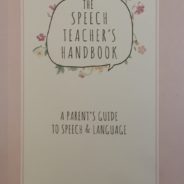
I recently came across this book on Amazon. It piqued my interest so I bought it. It is called “The Speech Teacher’s Handbook, A Parent’s Guide to Speech and Language” by Molly Dresner, MS SLP-CCC. I found the title to be a little awkward but the information in the book to be pretty good. First of all I know a lot of you out there will take exception to the use of “The Speech Teacher”, you all need to get past that. Face it we have a branding issue, which is certainly a topic for another time. I can understand why Ms. Dresner used the title “Speech Teacher” because in the world of early intervention that is how we are known. In the book she makes it clear that she is a “Speech Language Pathologist.”
The second part of her title provided a little more explanation regarding whom the book was written for but still seemed a little incomplete to me. People who are not Speech Language Pathologists might ask Speech and Language what? Parents might not know immediately that it is written for them.
Getting past the title, this little book contains a lot of good information for parents on how to foster speech and language skills with their little ones. Ms. Dresner’s guidance and explanations are clear and concise. There is a nice little summary at the end of each chapter. Some easy to understand speech and language developmental norms are found at the end of the book.
A seasoned SLP might look at some of Ms. Dresner’s suggestions and say that most of her information is just common sense. However, I’m seeing more and more older students who can’t name body parts/common objects, have poor listening/memory skills and produce short sentences so some parents out there do need this information.
The chapter on “Cocktail Talk” puzzled me a little bit since that seemed to be written for SLP’s. While Ms. Dresner initially mentions that you should make sure parents know they can get an assessment through their school system, she goes on to mention parameters of speech and language development in a variety of areas. (I personally back off on talking about speech and language issues when asked outside the professional realm. I have found that that people who engage me usually don’t follow my advice or take my advice to mean the child is probably ok. When people speak to you outside of the professional realm and without the child there, you have no knowledge of their background or other developmental needs. I’m big on including both in my assessments of students, even my middle to high school students.)
I’m giving thumbs up on this book. I think it would be an excellent resource to give out either to early intervention clients or as a welcome to daycare packet for little ones. Day care teachers could read this book as a refresher and daycare assistants could use this book as continuing education. Ms. Dresner has put together some wonderful ideas for simply interacting with your child through out the day. This book is not just for children with speech and language delays but for typically developing children as well. This book will “Help You Help Your Little One” which I believe was Ms. Dresner’s goal when she sat down to write this book.
SLPs, Contribute to your school newsletter
In my state, teachers and all professional staff have to generate personal SMART goals. With all the work SLPs do, the last thing I wanted to do was have to keep complicated data on something I was doing. At that point I decided to do something very easy for me that would benefit all students not just those with language issues. My SMART goal was to write monthly articles focusing on language development.
Initially, I found it wasn’t that easy to find universal themes that could be beneficial to all. However, knowing all we know about language and learning once I had a topic writing for parents was easy. I created articles about once or twice a month for that school year. The idea was well received by my principal. Basically it was free content for the school newsletter. Best of all if I published one article a month (sometimes weekly) I achieved my goal without extensive data collection.
I’ve slowly made these articles available to other SLPs on Teachers Pay Teachers. Here is my current list of articles available on TPT. These articles are written in a word document so they can be edited to fit the needs of you specific setting.
The School Newsletter: Practice Those Memory Skills-free
The School Newsletter: 10 tips to building a strong vocabulary (5 article series)
The School Newsletter: Don’t Drop Picture Books Too Soon
The School Newsletter: Don’t Forget The Details
The School Newsletter: Strengthen Language Skills Through Conversation
My section of the school newsletter was titled “Notes from the School Speech Therapist.” If I were to introduce this at another school I would probably change that title.
The articles are available in my TPT store. This was such an easy way to achieve my Smart goal. I received some very nice complements from my staff and administrators. It also made my presence in the building more obvious, helped to encourage language and learning beyond the school day and hopefully made parents more aware of what they could do to support their child’s development. I believe the articles were also a universal support that helped with general language development. Better Speech and hearing should be highlighted all year around not just in May.
Let me know what you think. I do have other articles to post so please check back often. If you have ideas for articles I would love to hear them.
Teresa
Stopping the Stuttering Trajectory in the Preschool Years
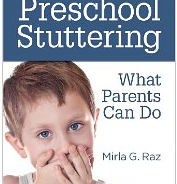
The School Speech Therapist would like to welcome guest blogger Mirla G. Raz. I first became acquainted with Ms. Raz when I was asked to review her most recent publication Preschool Stuttering: What Parents Can Do. I was duly impressed with the book (you can read my review here). As it turned out I was already very familiar with Ms. Raz’s work since I had been using her books from her Help Me Talk Right series for years. The Help Me Talk Right Books continue to be a staple in my therapy room.
Ms. Raz has shared an excerpt taken from her newly developed course Stopping the Stuttering Trajectory in the Preschool Years available through Northern Speech Services. The course is designed to teach SLPs how they can help parents navigate the emotional and often confusing landscape of stuttering. Given that Ms. Raz’s book was so helpful to me, I believe her course will significantly add to your body of knowledge. Teresa
From Stopping the Stuttering Trajectory in the Preschool Years By Mirla G. Raz
Stuttering during the preschool years can be an easy problem to solve, one that may stop the child’s stutter before therapy is ever needed. We can do this by helping parents understand the disorder and advising them how best to communicate with their preschooler.
When parents hear their child stutter, their first inclination is often to intervene without professional input. They believe that what they do will help their child stop stuttering. They may not realize that their actions can be counterproductive. We can help parents by asking them to avoid specific interactions. We can help them by offering replacement interactions.
Below I have listed the interactions to be avoided:
- Speaking for the child.
- Finishing words or sentences for the child.
- Interrupting the child when he is speaking.
- Facial or body language that shows the child the parent is anxious or upset about the child’s speech.
- Asking the child to perform or recite in front of others.
- Talking about the child’s speech when others are present.
- Getting upset or distressed when the child stutters.
- Calling the child a “stutterer.”
- Limiting the amount of time the child has to speak or indicating that the parent is in a rush and does not have the time to listen.
- Bombarding the child with questions.
- Poking fun of the child’s speech or teasing him about it.
Parent can replace unhelpful interactions with the following:
- The parent should get down to eye level with the child and make eye contact.
- The parent should listen to what the child is saying.
- The parent should not interrupt the child or try to help him as he stutters.
- When the child is done talking the parent should comment on what the child has said, not how he has said it.
Mirla G. Raz has been working as an SLP for over 40 years. She is the author of the popular Help Me Talk Right books. Her most recent publication, Preschool Stuttering: What Parents Can Do is a comprehensive book designed to help parents understand stuttering during the preschool years. The book explains what happens when a child stutters, stuttering facts, the role of emotions and temperament in stuttering, the emotions and roles of the parents, what can cause the stutter to be better or worse, the impact of the child’s environment, when and where to seek professional help and more. The books are available through her website www.helpmetalkright.com and Amazon (see links below).
Speech and Language Service Delivery, Be Proactive Parents

This article was originally published by Teresa Sadowski M.A., CCC-SLP on the now defunct Examiner web site in February 2012. Speech and Language Service Delivery, Be Proactive Parents was written to help parents advocate for appropriate and effective speech and language services for their child.
Once your child has been diagnosed with a language disorder or weakness, it’s important to be proactive about service delivery. Asking, “How often will my child be seen by the Speech Language Pathologist?” isn’t enough.
The service delivery process begins with the Speech Language Pathologist (SLP) making their recommendation at the team meeting based on testing, progress and your child’s specific needs. Unfortunately, recommendations may also be driven by the school’s schedule, the therapist’s caseload or the school’s philosophy. A typical recommendation might be 1-2 thirty minutes sessions a week using either the “pull out” or “push in” model.
In the “pull out” model, your child receives services in a separate small group**** or individual setting. They’ll receive specific instruction and practice in their area(s) of need. School schedules might not be conducive to this model. Sometimes it’s difficult to find half hour blocks where the student isn’t missing something important. Ask the team to explain the schedule to you. Ask when services will take place and what your child will be missing. Some schools have scheduled in a daily block of time that accommodates children who receive special services. During that block of time the other students are free reading, taking an extra elective or working on special projects. This not only helps with scheduling, it keeps the special need student from feeling singled out or from falling behind. If your school has not developed this block of time ask the administration to consider it.
Many schools are opting for the “push in” model which means the therapist goes into the classroom. If the “push in” model is recommended there’s a lot more to ask.
How many other students is the therapist servicing at the same time in the classroom? Any more than 3 or 4 students and you might begin to wonder if the therapist will have any significant contact with your child. How will the therapist address my child’s specific needs? If you are not satisfied with the response to this question, continue questioning using the proposed goals and objectives as a guide. How much consultation do the therapist and teacher have before and after the lesson? If consult time between SLP and teacher isn’t built in, “push in” will not be very effective. One of the main purposes of the “push in” model is to educate teachers on the language disability and how to implement classroom lesson plans that accommodate a student’s specific needs. Therapists may often recommend a combination of push in and pull out as an appropriate solution.
How big is the therapist’s caseload?. In some school systems SLPs are servicing 80+ students. Even a therapist with 30-40+ students is going to have little time to devote to your child. Trained Speech Therapy Assistants are frequently used in schools with large numbers. Just like therapists, some therapy assistants are good and some have limited skills. If a therapy assistant is involved in your child’s programming you need to ask three questions. How much experience does the therapy assistant have? Everyone has to start somewhere but if you have a child with specific and challenging language needs that require flexibility in programing, insist the SLP primarily works with your child. What kind of training does the therapy assistant have? Therapy assistants should either hold a certificate from an accredited program or have undergraduate degree in speech language pathology. How often does the assistant meet and consult with the SLP? In reality they should meet daily to discuss mutual caseloads, that doesn’t always happen. In some states the SLP must be in the building available to observe and supervise the assistant at all times. If you are uncomfortable with the response you receive to this question, ask to see the state regulations.
Most schools really do look out for the best interest of their students. And most therapists will answer programming questions with relative ease during the team meeting. However, it is easy for schools and therapists to become overwhelmed or find themselves struggling with limited resources. Develop a good working relationship with your child’s special educational team, check in with their service providers every so often and ask what you can do to help. In the end, your proactive actions will only benefit one person……..your child.
Workshop: Yoga and Mindfulness in the Classroom
Back in mid-December I attended a one day workshop called “Yoga and Mindfulness in the Classroom: Tools to improve self-regulation, learning and classroom climate” Lisa Flynn, E-RYT, RCYT presented a program that she designed to help bring yoga and mindfulness into the classroom. Not only did she present the concrete parts of the program, Ms. Flynn also did a good job explaining how students could benefit both academically and behaviorally.
My motivation for attending was to learn a little bit about mindfulness and incorporate some quick and simple techniques into my therapy sessions. I was actually planning for that to be my smart goal for the year. The initial sequence presented focused on activities that could easily fall under the SLPs scope of practice. One listening activity focused on auditory attention, some breathing and head/neck movements could fall under oral motor, movements that pair up with others could fall under social and another activity focusing on relaxation/imagination is basically visual imagery. I’m sure I could find many more examples.
Ms. Flynn has modified many of the basic yoga positions to be “school friendly.” This means nothing too challenging, minimal space requirements and no touching the floor. Even more impressive is that she has put together a variety of sequences to choose from depending on needs. Ms. Flynn was also very mindful of the time constraints schools face, creating sequences that vary from 1-2 minutes to 20 minutes. Her suggested sequences include
- Morning meeting
- Take a Break
- Transitions
- Pre-Writing and Writing Break
- Pre-Test and Test Break
- Calm/Focus
- Mood/Energy Shift
- Close of Day
Several of these 1-2 minute sequences would be perfect for speech/language therapy sessions.
Yoga and Mindfulness in the Classroom was hosted by PESI. It really was a good bang for the buck. Not only was Ms. Flynn very knowledgeable but she also shared an awful lot of information and the take homes were very complete. If you wanted to implement her techniques on a larger scale there were materials available to purchase. Ms. Flynn has created sets of cards to guide, explain and demonstrate the aspects of her program and I must say they were quite good.
If it would up to me, I spend some consult dollars on this program to have Ms. Flynn train the teachers and develop a program that would fit my schools needs. I see this approach as proactive and being able to help in so many ways. I could also envision physical education teachers taking the lead on this to help incorporate this into daily practice. This is a program all kids could benefit from. This could be considered a universal support in schools and foster skill development in so many areas.
This was honestly one of the most enjoyable workshops I’ve been to in a long time. I do have to wonder if it was enjoyable because we got to get up and move around. If movement and breathing made the workshop more enjoyable that just proves it works. I’m looking forward to incorporating many of these techniques into my therapy sessions.
Read more about Lisa Flynn’s Yoga 4 Classrooms program on her web site
Product Review: My First Sound and Word Cards
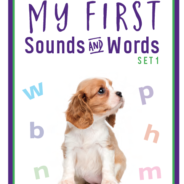
I recently came across a set of online flash cards, focusing on the language development needs of younger children. These articulation/vocabulary/phonemic awareness cards are designed Kimberly Marino M.A. CCC-SLP, and are truly worth a shout out. Ms. Marino has used her expertise as a speech language pathologist to choose early acquired high frequency words focusing on the early developing sounds of /m/, /h/, /p/, /w/, /b/, /n/ and then pairing those words with clear photographs. I particularly like the photographs, with the white background the photograph pops.
Any Speech Language Pathologist will look at these cards and see their immediate value as a therapy tool or something to give to parents for practice at home. I would have loved to have a set of these when I was working in EI or with more involved preschoolers. These cards may look simple but are tailored to the developmental needs of young children.
My First Sounds and Words cards can be purchased on Esty for $10. There are several printing options to created different sizes. There is also a My First Sounds and Words set 2 focusing on the next level of sound development T, D, K, and G.
Kimberly Marino M.A. CCC-SLP is also the author of Speech Mama Blog, Empowering parents with the tools they need to help their little one or big one become a better communicator. Follow her at thespeechmama.com
TPT: Love it or hate it?
I came across this blog post written a few years back “I teach Kindergarten and I don’t like Teachers Pay Teachers” by Matt Gomez kindergarten teacher. The comments posted by others have taken off. I wanted to simply comment but I knew my comment would be very verbose so I figured I could turn it into a blog post (and have another reason to mention my material on TPT). Keep in mind that my view of TPT as a Speech Language Pathologist is going to be a little different. Also Mr. Gomez isn’t the only one who doesn’t like to use TPT….lots of similar blog posts out there. [Just noted a follow up blog post by Mr. Gomez, “Teachers Pay Teachers-the Sequal” again tons of comments. I wish I had his following!]
Reading the article I can clearly understand Mr. Gomez’ point of view.
#1 Of course teachers are trying to sell things that work in their classroom. Teachers and therapists have been doing this for years. It was just a lot harder to do and they did it through the larger publishing companies. You have to look at TPT as a self publishing company. Over the course of 30 years I have purchased (at great expense) lots of books and materials from educational publishing companies that never went through trials, had data collected, was tested out or demonstrated. At least with TPT if I buy something that doesn’t work, I’ve only lost a few dollars (well maybe a more than a few with ink/paper costs). I agree that the PDF format makes it difficult to customize to totally meet the needs of a class but I’ve experienced that with lots of materials over the years. This is where your creativity should come in. Still working with materials in a PDF format is still easier to modify (the activity not the materials) than, the computer program that basically gives the kids the answers if they can figure out where to click or any of a number of applications that tout to be educational. I guess my point is there are limitations with all materials. I look for materials and Apps that fit the specific needs of my students and never buy anything just because it is cute or fun. I thoroughly look through the materials to see if it even comes close to fitting my needs. I also continue to use some materials that are over 20 years old. Why….because they are the best at targeting the specific skill I’m working on. As an SLP I can get away with old and tattered.
#2 TPT my be fostering the “laminating culture” but they didn’t create it. We’ve been laminating for years. Common Core is making teachers turn to sites like TPT for help. Schools with good curriculums have had to throw out those curriculums and materials. Most don’t have the funds or even the understanding to supply common core and teachers are trying to do the best they can. Many are worried about losing their jobs if common core isn’t followed or if their students don’t score well on a test. If the people who commented on Mr. Gomez’ site put their efforts into advocating for education instead of being miffed over comments about TPT imagine what could happen.
#3 I did cute when I was younger. My personality has changed, my workload has grown and for me there just isn’t time for cute. Even some of the school wide cutesy stuff bothers me (why do we need pajama day?). I haven’t given away a sticker in years. Kids do like to have fun and I try to foster that through hands on activities, laughing, joking and conversation, all while staying focused on my goals/student needs. I totally agree with Matt that real images and hands on materials are much more valuable than cutesy images that are basically charactitures of themselves. Learning while experiencing “real” things/situations/theories/ideas always works out better.
#4 I would be hesitant to use any item from TPT for anything more than a supplementary activity to practice skills being taught. To use a created “program” listed on TPT, the data isn’t gong to be there to support
#5 Other than tutoring (usually for a lot less than teacher pay), most teachers have few other ways to supplement their income. SLPs often give discounts for private services when insurance cannot be accessed. Even then insurance and especially medicaid/medicare, often doesn’t even come close to an expected hourly rate for speech therapy. Why shouldn’t individuals try and market their ideas. TPT just makes it easy. Speech Language Pathologists create or customize just about every bit of material they use to fit the needs of specific students. If I’ve created something that works well for me, maybe it will work for others. You never know where that one great idea is going to come from.
#6 Sharing ideas and material is wonderful. There is just no reason to reinvent the wheel every time a new subject, theory, curriculum or flavor of the day pops up. TPT is a time saver and I imagine sometimes a life saver. If you’re not a graphics wiz it’s the place to go.
Basically I like TPT and I like what it does to create business opportunities for educators. I have a few items on TPT, primarily articles suitable for a school newsletter and one killer packet of workshop materials for paraprofessionals on Speech and Language development. I doubt I’ve made 100 bucks in the three years I’ve been with TPT. I’ve purchased about 35 items on TPT and use about 10 consistently. That’s probably a higher percentage than with my purchase and used of very expensive traditional materials.
My advice…..if you’re going to use TPT
Don’t impulse buy
Use TPT products to supplement an activity or reinforce a skill not as a total lesson.
Look through the material, make sure it is something that comes very close to fitting your students specific needs.
Will your students like it?
Can you use it in different ways and with different levels?
Consider the overall cost. Educators are not business people and often don’t factor in paper, ink, wear/tear on your printer and your time
Make sure it is a time saver for you
Always check out the free downloads but don’t print unless you really like it (again time and money)
Don’t pay too much
Check out my TPT store , especially if you’re an SLP looking for articles to put in your school newsletter (a fantastic professional goal by the way) (ok I had to throw that in)
Teresa